

Alix Spiegel
Alix Spiegel has worked on NPR's Science Desk for 10 years covering psychology and human behavior, and has reported on everything from what it's like to kill another person, to the psychology behind our use of function words like "and", "I", and "so." She began her career in 1995 as one of the founding producers of the public radio program This American Life. While there, Spiegel produced her first psychology story, which ultimately led to her focus on human behavior. It was a piece called 81 Words, and it examined the history behind the removal of homosexuality from the Diagnostic and Statistical Manual of Mental Disorders.
In January 2015, Spiegel joined forces with journalist Lulu Miller to co-host Invisibilia, a series from NPR about the unseen forces that control human behavior — our ideas, beliefs, assumptions, and thoughts. Invisibilia interweaves personal stories with fascinating psychological and brain science, in a way that ultimately makes you see your own life differently. Excerpts of the show are featured on the NPR News programs Morning Edition and All Things Considered. The program is also available as a podcast.
Over the course of her career in public radio, Spiegel has won many awards including a George Foster Peabody Award, a Livingston Award, an Alfred I. duPont-Columbia University Award, a Scripps Howard National Journalism Award, and a Robert F. Kennedy Journalism Award.
Originally from Baltimore, Maryland, Spiegel graduated from Oberlin College. Her work on human behavior has also appeared in The New Yorker magazine and The New York Times.
-
The developer of cognitive behavioral therapy, Dr. Aaron Beck, died on Monday at age 100. In 2015, NPR's Invisibilia introduced listeners to Beck.
-
 Years before he got diagnosed with Parkinson's, Joy Milne noticed her husband's characteristic scent had changed. The discovery that she could smell his illness has opened up a new field of research.
 -
NPR's Invisibilia podcast brings you a story about a new Facebook effort to build a modern kind of Rosetta Stone, using artificial intelligence.
-
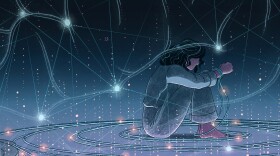 Deep brain stimulation offers relief from some neurological problems and is being tested for mood disorders. But the treatment — an implant in the brain — raises ethical questions.
 -
We have the story of one woman who is taking part in an experiment on deep brain stimulation.
-
 Thousands of teens suffer from a rare chronic pain condition that makes everyday life excruciating. Some are trying a counterintuitive treatment approach: Load up on pain until you learn to ignore it.
 -
NPR's Invisibilia podcast is back for a fifth season. The first episode this season is about pain — and the changing way in which our culture thinks about and treats pain.
-
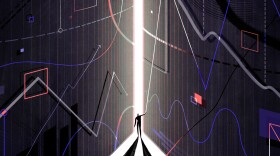 A massive computer competition works to identify the patterns that can predict where someone will end up in life. But whether this competition has a winner may depend on your viewpoint.
 -
 When Somalia decided to start a reality show with a singing competition, there was a major problem. Singing in public could bring on the wrath of al-Shabab.
 -
 Reality TV is popular around the world. It's also roundly mocked as formulaic and contrived. But can that kind of fragile fantasy meaningfully influence the real world?


