
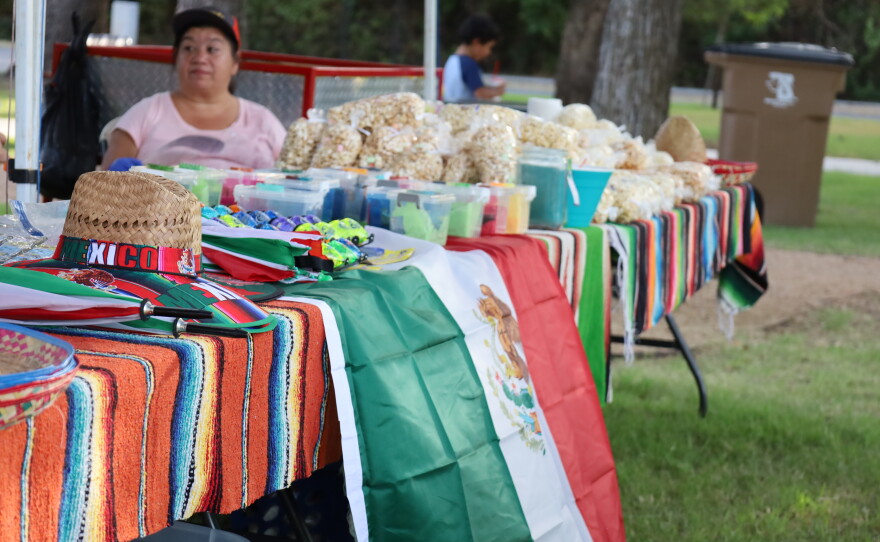
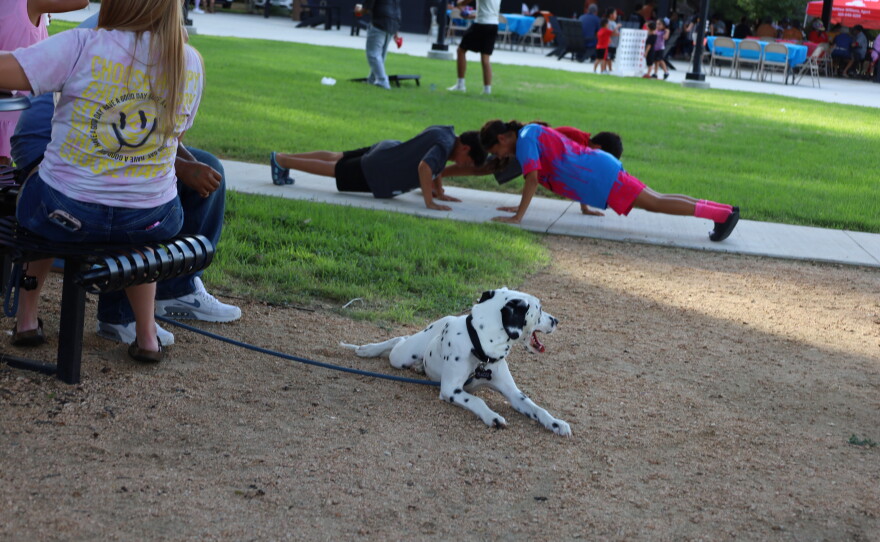
Children played bean bag toss, connect four, and rode bikes around the park, while music and smells of spicy meats floated through the air.
The United States observes Hispanic Heritage Month every year from mid-September to mid-October, celebrating the history, culture, and contributions of U.S. Latino and Hispanic Communities, which make up 20% of the U.S. population, and 40% of Texas population.
Juan Andrade, says he worked to found SALSA in Brownwood to support the growing Hispanic population locally and in Texas as a whole, “It was to organize to create unity in the community because the population is now 10 times larger. The Hispanic population is 10 times larger than it was when I was a boy growing up here.”
And according to the Pew Research Center the Latino population is projected to grow to 29 of the U.S. population by 2050.
Hispanic heritage was first officially recognized in the 1960s-when President Lyndon B. Johnson declared National Hispanic Heritage week. Officials chose to start the celebration on September 15th, because on that date in 1821 Costa Rica, El Salvador, Guatemala, Honduras and Nicaragua declared their independence from Spain. The next day Mexico also declared its independence from Spain. In 1988, Congress passed a bill to expand the week to a full month, and President Reagan signed it into law.
Today, educational institutions, community groups and individuals fill the month with food and dance and fun. The Strategic Alliance for Leadership and Social Action, or SALSA, organized Brownwood’s festival this year.
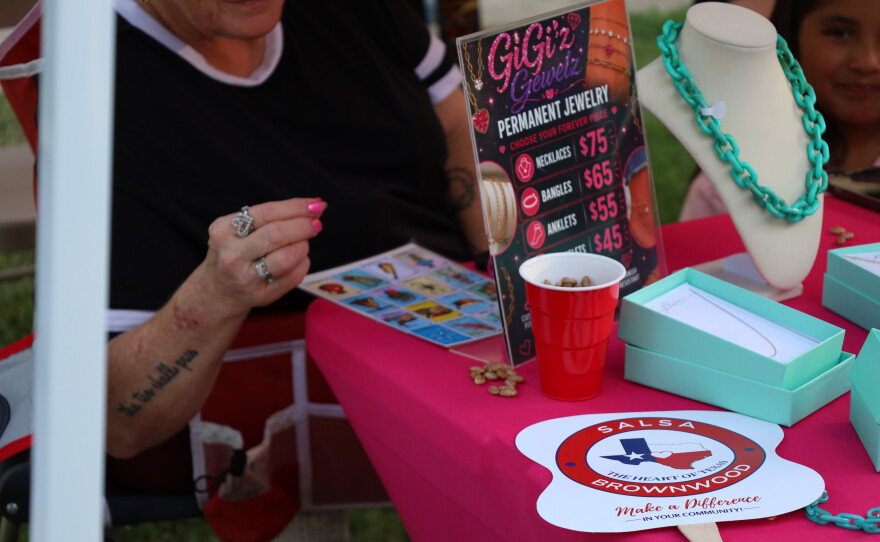
A favorite among the attendees of the celebration was La Loteria. The traditional Loteria game originated in Italy and eventually arrived in Mexico, by way of Spain, in 1769. Loteria is similar to bingo, but instead of the number being called out, a colorful illustration is drawn from a deck of 54 cards, its name called and the card shown to the players.
Loteria is timeless. And it’s accessible across generations due to its simplicity. Each image on the cards shows symbols that have roots in Mexican folklore, preserving Hispanic heritage through play.
The mix of generations is a natural part of these celebrations, reflecting the family-centered values that are woven throughout traditions and gatherings.
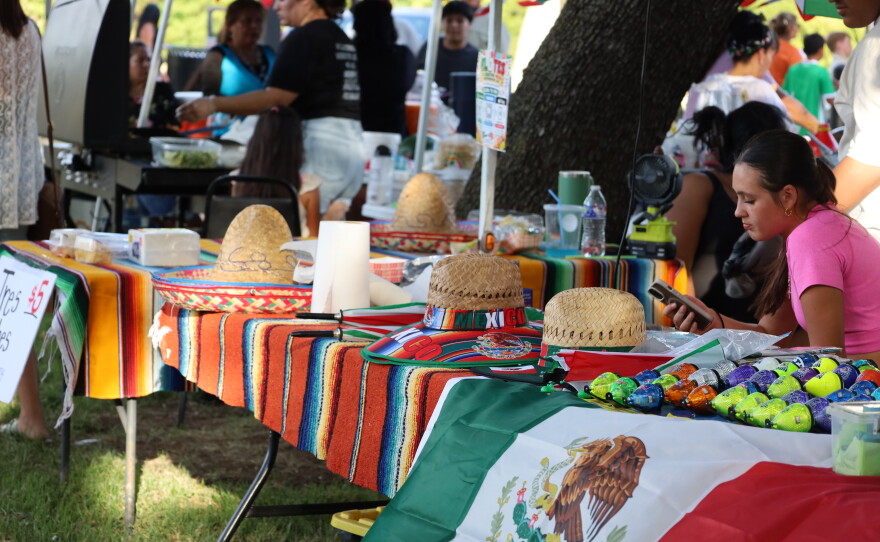
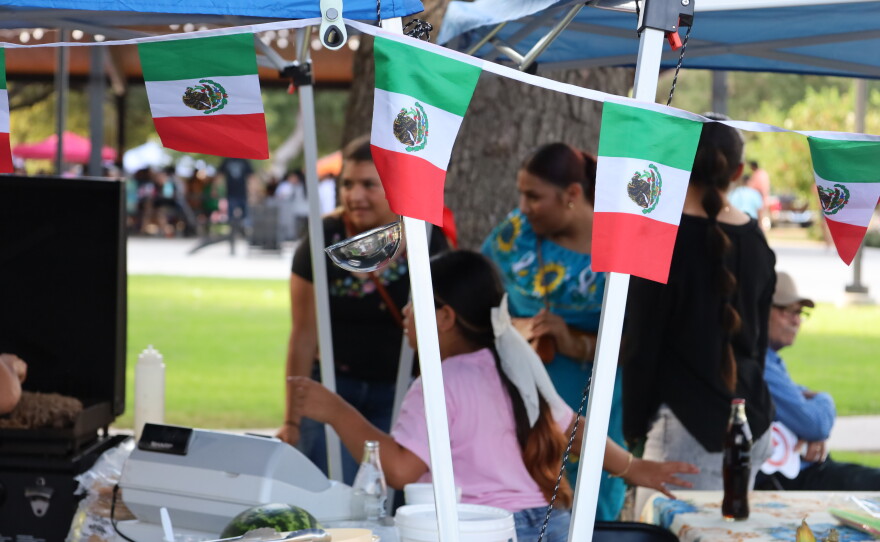
Angela, or Angelica, sold homemade Tres Leches at Brownwood’s festival. She says tight family ties are her favorite part of Hispanic heritage, “I just love how family oriented, I mean, I talk to my mom every day, my family every day. I mean, we're just very close and I like to see everybody be able to get together for that.”
That sentiment was echoed by Madison Roberson at the State Farm Insurance booth she hosted with her husband Jeremy, “Honestly, the family values. I grew up, um, with his brother and they, and he's half Hispanic and just their values and their morals have been wonderful to see in the culture.”
The closeness of families can extend out beyond blood relatives. Community members formed SALSA to build a supportive environment for the local Hispanic community. And founder Juan Andrade says SALSA is active throughout the year.
“Our main program is awarded scholarships. Every year, we raise money to award scholarships to Hispanic students graduating in this area, not just from Brownwood, but Early, Zephyr, and Blanket, Bangs, the immediate vicinity, the surrounding counties,” said Andrade.
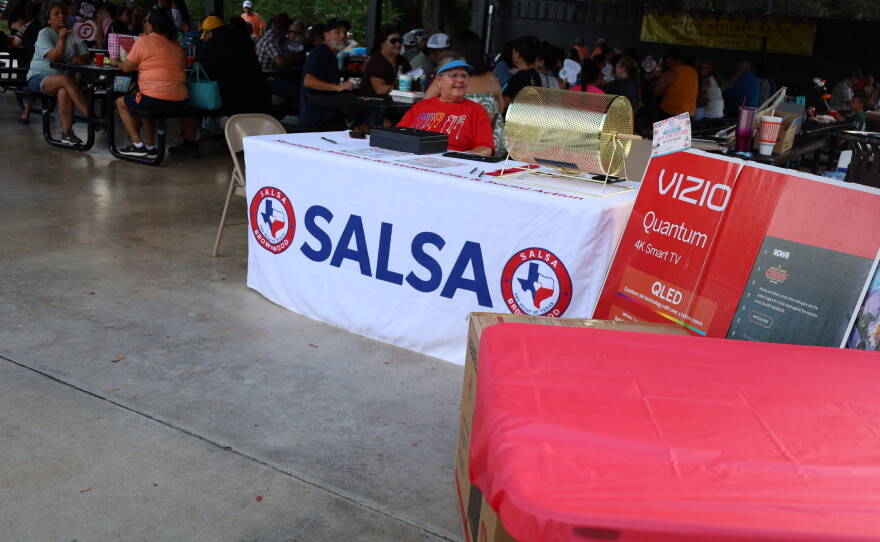
To help fund that work organizers held a 50/50 raffle with prizes. SALSA volunteer Stephanie Russel helped run an actual salsa competition among local restaurants another addition to the event. Russel began volunteering with SALSA when she was a student at Howard Payne University, and says she’s continued because every cent of the profit is given back to scholarships that bless young students. Russel says the events, like the heritage celebration, is not just for the Hispanic community.
“And that is what really pulls the community together, but also brings it out. It's not just the Hispanic cause I know you can't see me, but I'm, you know, fair white pasty chick with blond hair. But it is, it's a, it's a difference. It brings a whole community together cause it's all about connecting with one another and being able to give forward to the youth,” said Russel.
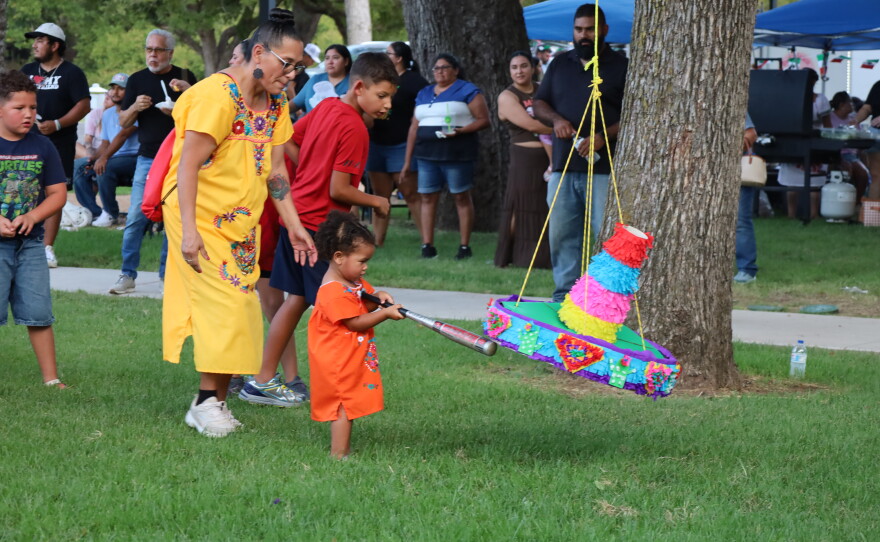
Before the festivities ended organizers set up a final activity for the kids. They strung a piñata up in a tree and all the children lined up to take a whack at knocking the candy free. The adults watched, clapped, and encouraged the kids, singing the traditional song “Dale, Dale, Dale”.
For Juan Andrade, the celebration gives Latino’s a chance to share the beauty of their culture, which he says is more important than ever before.
“It gives us a chance to tell our story, who we are and what we are, and most importantly, what we bring to the table because of all the demonization that's going on now about Hispanics and just distrust of the community. This is why we celebrate Hispanic Heritage Month because of what we bring to the table. A country needs people. Without people, the country will not grow, it can't grow and it won't prosper,” said Andrade.
Hispanic Heritage Month still has a few weeks left and more celebrations are planned including The Abilene Chamber of Commerce’s Business Mercado 2026: Fiesta en el Barrio at the Abilene Convention Center, and Celebrations of the World: Día de la Raza being held at the Abilene Public Library. Information about these events and others can be found on the Abilene Cultural Affairs Council’s Facebook or City of Abilene’s Website, as well as KACU’s event’s tab.
